
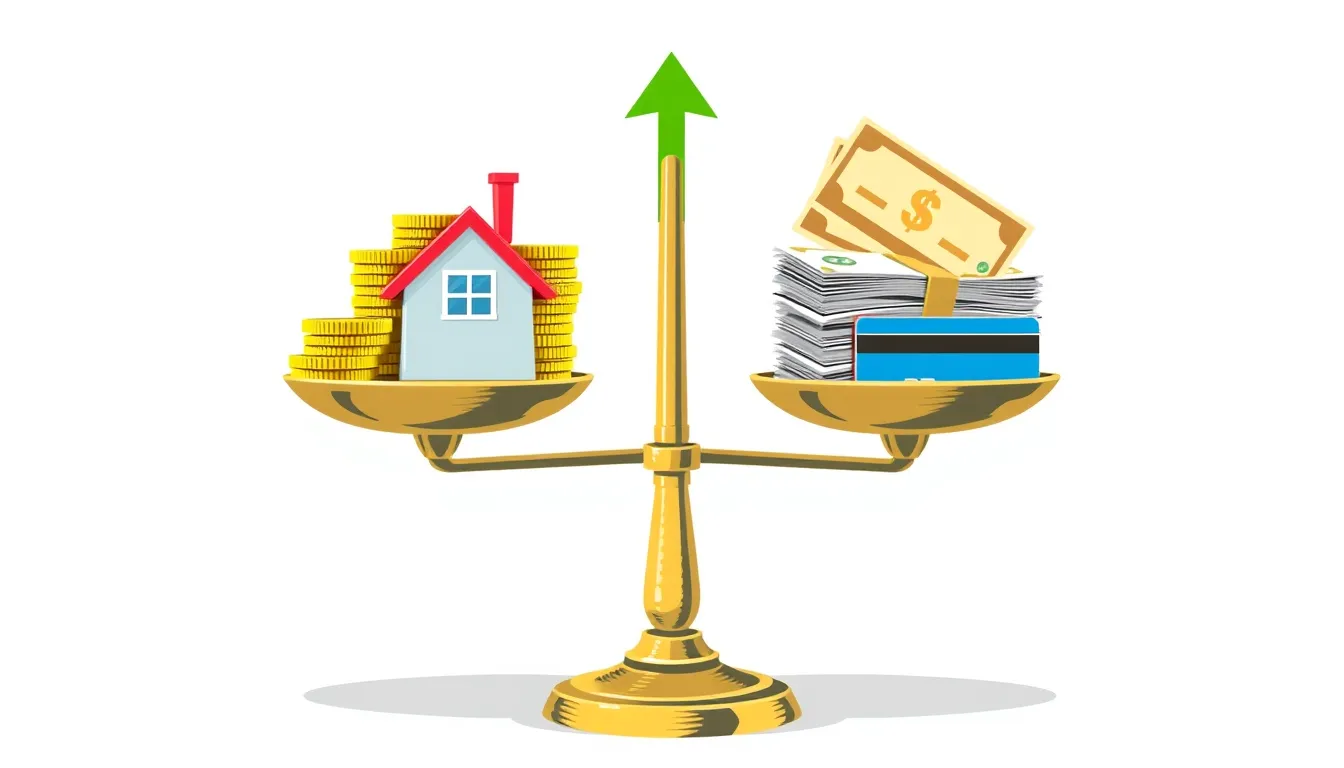
If you want to know exactly where your money is going and how to improve your financial position, this guide provides the tools you need. It cuts through complex jargon to help you distinguish between what builds your wealth and what drains it. You will learn to calculate your net worth accurately and identify specific areas for improvement. By the end, you will have a clear, actionable plan to increase your assets and reduce liabilities. This approach focuses on practical steps rather than abstract theory, ensuring you can apply the information immediately to your personal budget.
Clarify What Counts as an Asset and a Liability
- Asset: Anything you own that has market value or generates cash flow. Examples include cash, savings accounts, investment portfolios, real estate, and even valuable personal property like vehicles or equipment.
- Liability: Any financial obligation you owe to others. This includes credit card balances, mortgage debt, auto loans, student loans, and unpaid bills.
The distinction between these two categories is the foundation of your Net Worth. Net Worth is simply your total assets minus your total liabilities. If your liabilities exceed your assets, you have negative net worth, which signals financial distress. If your assets exceed your liabilities, you have positive net worth, indicating financial stability.
Why does this matter? Understanding the difference helps you make informed decisions about spending and saving. For instance, buying a house increases your assets, but the mortgage creates a liability. While the asset grows in value over time, the liability shrinks as you pay it down. However, ignoring the Interest Expense on that debt can erode your Cash Flow, leaving less money available for other investments.
Some items, like a personal car, are often debated. While technically an asset, most vehicles depreciate rapidly, meaning their value drops quickly after purchase. In personal finance, it is often more useful to view such items as expenses that reduce your Equity rather than true wealth-building assets. Focusing on assets that appreciate or generate income, such as rental properties or dividend stocks, is generally more effective for long-term growth. By clearly identifying what counts as an asset versus a liability, you can stop treating all possessions as wealth and start managing your balance sheet strategically.
Gather Your Financial Data and Calculate Your Net Worth
Before making changes, you need a clear snapshot of your current financial position. Start by collecting recent statements for all accounts. You will need bank and credit union statements, investment account summaries, real estate property assessments, and loan pay-off statements. Include personal items like vehicles or significant equipment if they hold substantial value.
Create a simple spreadsheet with two main columns: Assets and Liabilities. In the Assets column, list every item you own that has monetary value. Break this down into categories like cash, investments, real estate, and personal property. In the Liabilities column, list every debt. This includes mortgages, car loans, student loans, credit card balances, and any other outstanding obligations. Ensure each entry reflects the current market value or exact balance owed, not original purchase prices.
Once your lists are complete, calculate your Net Worth. The formula is straightforward: Total Assets minus Total Liabilities equals Net Worth. If the result is positive, you own more than you owe. If it is negative, your liabilities exceed your assets. This number serves as your baseline metric. Track it monthly to monitor progress. A rising Net Worth indicates you are building wealth, while a declining figure signals that Interest Expense or debt accumulation is outpacing asset growth. This calculation provides the objective data needed to target specific areas for improvement in the next phase of your financial plan.
Prioritize High‑Impact Changes to Boost Assets and Trim Liabilities
Rank your financial moves by their impact on Net Worth and Cash Flow. Focus first on actions that reduce Interest Expense or increase asset value directly. This approach ensures your effort targets the biggest leaks in your financial structure before addressing smaller issues.
Start by eliminating high-interest debt. Credit cards and personal loans often carry the highest rates, making them the most expensive liabilities. Paying these down frees up Cash Flow that would otherwise go toward Interest Expense rather than building Equity. Set a specific target, such as reducing the principal balance by a fixed amount each month, to ensure consistent progress.
Next, automate your savings. Linking a fixed percentage of your income to an investment or savings account removes the friction of manual transfers. This guarantees that your asset base grows consistently, even during periods of low discipline. The expected result is a steady accumulation of assets without requiring daily decision-making.
Finally, liquidate non-essential assets. Identify items that occupy space or require maintenance but do not generate income or significant appreciation. Sell unused equipment, vehicles, or collectibles. Use the proceeds to pay down debt or invest. This action converts stagnant Equity into active Capital, improving your overall balance sheet efficiency.
Avoid spreading your efforts too thin. Prioritizing one high-impact change at a time prevents burnout and allows you to measure results accurately. By tackling the most expensive liabilities first, you maximize the return on your financial effort. This strategic ordering ensures that every dollar saved or invested contributes meaningfully to your long-term goal of increasing Net Worth.
Execute the Step‑by‑Step Improvement Plan
- Action: Track every dollar of Cash Flow for three months using a consistent method. Result: You identify hidden spending leaks and establish a baseline for where your money actually goes.
- Action: Allocate surplus Cash Flow to pay down high-interest debt before making minimum payments on low-interest obligations. Result: Interest Expense drops significantly, freeing up capital for future investment.
- Action: Direct funds toward income-generating Assets or appreciating investments rather than depreciating personal items. Result: Your Asset base grows through appreciation and generated income, strengthening Equity.
- Action: Review your budget quarterly to adjust for changes in income, expenses, or market conditions. Result: Your financial strategy remains aligned with current realities, preventing drift from your goals.
- Action: Recalculate Net Worth monthly by updating Asset values and Liability balances. Result: You gain clear visibility into progress, allowing you to celebrate wins or pivot strategies when results lag.
This structured approach turns abstract financial concepts into tangible actions. By consistently applying these steps, you create a feedback loop where reduced Liabilities and increased Assets directly enhance your financial resilience. The key is consistency. Small, regular adjustments to Cash Flow management compound over time, leading to substantial improvements in your overall financial health. Remember that Depreciation affects the value of physical Assets, so focus on digital or real estate assets that retain or grow value. This focus ensures your efforts contribute to long-term stability rather than short-term satisfaction.
Spot and Avoid the Most Common Mistakes
Mistakes in evaluating Assets vs. Liabilities often stem from incomplete data or optimistic bias. Correcting these errors requires a rigorous audit of your financial records rather than relying on memory or superficial estimates.
The most frequent oversight involves hidden liabilities. Many individuals forget to include pending medical bills, tax obligations, or informal loans to friends as Liabilities. To fix this, create a comprehensive list of all outstanding debts, including future scheduled payments. Update your Net Worth calculation immediately after identifying these hidden costs to reflect your true financial position.
Overvaluing depreciating assets is another critical error. A car or piece of office equipment is an Asset, but its market value drops significantly upon purchase. If you use the purchase price instead of the current market value, you inflate your Equity. To correct this, research current resale values regularly and adjust your balance sheet accordingly. This prevents false confidence in your financial strength.
Neglecting regular reviews allows small errors to compound into major inaccuracies. Your Cash Flow changes monthly, affecting both income and Interest Expense. Without periodic updates, your plan becomes obsolete. Schedule a quarterly review to reconcile your actual spending against your budget and verify asset valuations. This discipline ensures that your strategic adjustments remain relevant and effective.
Finally, ignoring opportunity costs can misdirect your efforts. Focusing solely on reducing debt while ignoring high-yield investment opportunities may slow your long-term growth. Balance debt reduction with strategic asset acquisition to optimize your overall trajectory. By systematically addressing these common pitfalls, you build a reliable foundation for sustainable financial improvement.